
- SKATEBOARDING NEWS STORIES
|
Returns: Not accepted
| Arrighi rolls out Eswic apparel lineJimmy Arrighi discusses his new skate apparel upstart, Eswic Clothing |

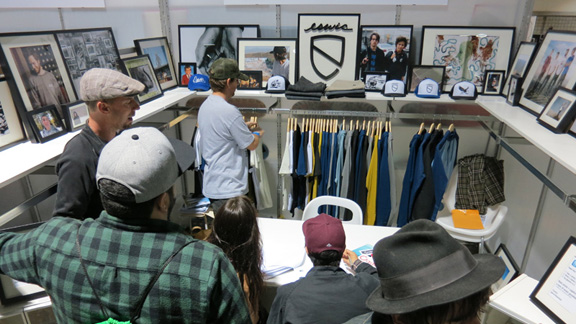 Courtesy of EswicThe Eswic booth at Agenda, featuring candid photographs of team riders and the new apparel line.
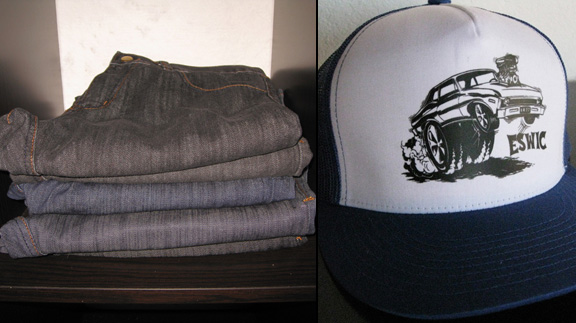 Courtesy of EswicLeo Romero's new signature pants and trucker hat from Eswic.
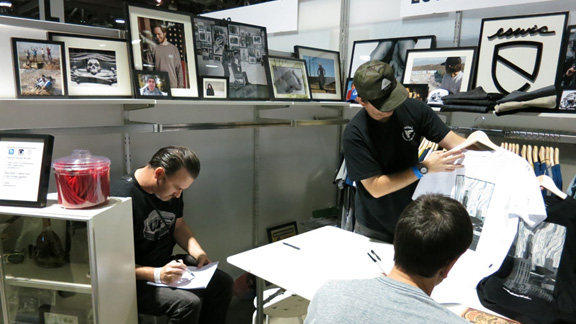 Courtesy of EswicEswic team rider Ed Templeton and a big old jar of vegan licorice at the Agenda tradeshow in Long Beach.
The skateboarders bringing peace to Tunisia
How do you bring people together in the immediate aftermath of a revolution? Meet the Bedouins, the arty skate gang which commandeered an abandoned mansion in Tunisia to promote peace in the wake of the upheaval
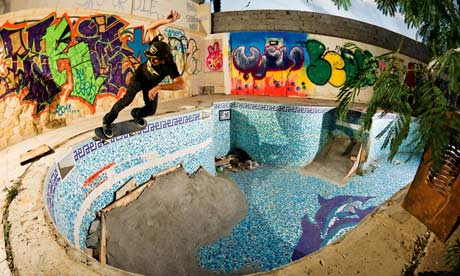 Skating in the converted pool. Photograph: Nathan Gray
As the dust of Tunisia's jasmine revolution settled, some may have found it difficult to see the potential of bullet-riddled buildings and a swimming pool full of rubble. But not one troupe of skateboarders and street artists.
Known collectively as the Bedouins, the Middle East-based crew – consisting of between 10 and 20 members – aims to bring residents of conflict zones together through the medium of skateboarding and art. Their first jaunt was documented in a film called Sour, which saw Jordanians and Israelis jumping the cultural divide to ride with each other in the midst of the 2006 Lebanon war. Following suit, the wily skaters went in search of post-revolution skate spots in Tunisia and unearthed a goldmine – Imed Trabelsi's abandoned mansion.
Trabelsi, the former construction minister of toppled dictator Zine El Abidine Ben Ali and the nephew of his wife, was chased out of his mansion by protesters angry at his corrupt dealings within Tunisia's political ranks. After Trabelsi fled, the Bedouins took root in the once immaculate mansion and turned it into a makeshift skate park and street-art exhibition in a single day. The result was a den of graffiti and reinvented architecture, purpose-built with the aid of locals who emptied the pool and built up concrete cambers at the corners to make it skateable.
The founder of the Bedouins, Nathan Gray envisioned this elaborate, improvised renovation. "It was spontaneous," he says. "We never had a plan to do this project before we arrived in Tunisia. We just knew the big picture: we wanted to inspire the youth around the world, and support the Tunisian skate scene and the artists. When we got there, we were like: 'How can we do it? What resources do we have? What's here?'"
Gray first founded the non-profit organisation after taking skateboards to the slum districts of Bangalore on a student exchange trip. He taught the children how to ride before returning a year later to live with them for several months.
After arriving in Tunisia last summer, the skaters visited several crumbling sites before being taken to the ransacked Trabelsi mansion by some nearby residents who thought they might find it interesting. "The locals were like, 'Check out this mansion, the graffiti's all political!' It was already kind of a landmark to them." As the crew and street artists arrived at the Trabelsi house, they faced a scene of devastation. "When we got there and saw the pool, it was full of trash," he laughs. "But we were like: 'This could be a dream … let's make it happen.' We saw what was there and chose to transform it, that's what we do. We're skaters and artists – we transform things. But it was important to do it in a way that would honour what the Tunisians had been through."
The locals shared the Bedouins' vision and gathered a team of volunteers from the surrounding areas. Scores of people became involved in a matter of hours. "We connected with a few residents when we got there, we made some calls and they said: 'Yes! We'll be there in an hour and we'll bring some of our friends,'" recalls Gray, as if he were still there digging rubble from the dolphin tiled swimming pool and mixing Postcrete in a bucket. "And then their friends made some calls. Everyone showed up and liked the idea of converting the place into something anybody could skate and enjoy. The locals told us they'd help out however we needed them to. They didn't know how to build it, but they were down to make it happen".
The foundations for the concrete concaves were built up from destroyed pillars that protesters tore down while raiding the mansion and chasing the crooked politician out of his ill-gotten estate. "It was a cool thing that we used a lot of the stones that were broken up and shattered from the house for the foundations of the ramps," adds Gray.
As the ramps set in the midday sun the street artists moved in and began to redecorate the walls, adding political graffiti. One of the most symbolic is a colourful mural put up near the converted pool by Yehia Ossama, that reads "Al Arab" ("The Arabs"). Yehia is a street artist from Egypt who wanted to pay his respects to the Tunisians for triggering the wave of revolution that liberated his country. Gray explains: "Yehia experienced the Egyptian revolution, so he came to Tunisia and was honoured because those guys helped inspire his country's uprising. [In Egypt] he had to guard his house every night from looters – skating was just out of the question. So out of solidarity and the chance he had to skate again, he just wanted to write that piece on the wall. It was pretty powerful."
The Bedouins, with the help of pro skaters, NGOs, and even the US embassy in Tunisia, film and document all of their expeditions. From their first film, Smile, which followed Gray's time in India to Sour – "a film about doing the things you love with people you're not supposed to like" in the middle of the Lebanon war, and now Push Tunisia, which will premiere this year.
Later in their Tunisian excursion, the Bedouins met with El Général, the political Tunisian rapper who was imprisoned a week after the uprising because of an underground release of his song Rais Lebled, which is now referred to as the anthem of the jasmine revolution. Rais Lebled criticised Ben Ali's corruption and how the disadvantaged youth were being ignored. El Général spoke of the incident. "It's like any other song I've written, except it came out at a critical time – 7 November 2010 – when Ben Ali was celebrating 23 years of presidency, 23 years of 'owning' Tunisia. I released it that day as a gift to him".
Strict censorship laws at the time kept dissident music out of the mainstream, so El Général put the track out via the internet. "Al Jazeera made a report on the song and the buzz it created on Facebook. After that, there were clashes in the streets. On the 17 December in Sidi Bouzid, Mohammed Al Bouazizi burned himself. After that I released another song called Tunis Bladna (Tunisia is our country). Then the police came to my house at 5am and I was taken to the ministry of internal affairs for investigation. I stayed there for three days. They wanted to file a case against me for 'incitement of the people against the president'. The news got out, and the fans on my Facebook page and the Tunisian people started talking about it. Al-Jazeera and France 24 published news about how El Général had been arrested. Three days later I was released".
El Général has since been named as one of 2011's most influential people by Time magazine and now has the backing of the new Tunisian Ministry of Culture. The mansion-come-skatepark is still going strong and, although nowhere near as significant as Bouazizi's self-immolation and the uprising, its DIY energy stands as a testament to the Arab spring.
Skating in the converted pool. Photograph: Nathan Gray
As the dust of Tunisia's jasmine revolution settled, some may have found it difficult to see the potential of bullet-riddled buildings and a swimming pool full of rubble. But not one troupe of skateboarders and street artists.
Known collectively as the Bedouins, the Middle East-based crew – consisting of between 10 and 20 members – aims to bring residents of conflict zones together through the medium of skateboarding and art. Their first jaunt was documented in a film called Sour, which saw Jordanians and Israelis jumping the cultural divide to ride with each other in the midst of the 2006 Lebanon war. Following suit, the wily skaters went in search of post-revolution skate spots in Tunisia and unearthed a goldmine – Imed Trabelsi's abandoned mansion.
Trabelsi, the former construction minister of toppled dictator Zine El Abidine Ben Ali and the nephew of his wife, was chased out of his mansion by protesters angry at his corrupt dealings within Tunisia's political ranks. After Trabelsi fled, the Bedouins took root in the once immaculate mansion and turned it into a makeshift skate park and street-art exhibition in a single day. The result was a den of graffiti and reinvented architecture, purpose-built with the aid of locals who emptied the pool and built up concrete cambers at the corners to make it skateable.
The founder of the Bedouins, Nathan Gray envisioned this elaborate, improvised renovation. "It was spontaneous," he says. "We never had a plan to do this project before we arrived in Tunisia. We just knew the big picture: we wanted to inspire the youth around the world, and support the Tunisian skate scene and the artists. When we got there, we were like: 'How can we do it? What resources do we have? What's here?'"
Gray first founded the non-profit organisation after taking skateboards to the slum districts of Bangalore on a student exchange trip. He taught the children how to ride before returning a year later to live with them for several months.
After arriving in Tunisia last summer, the skaters visited several crumbling sites before being taken to the ransacked Trabelsi mansion by some nearby residents who thought they might find it interesting. "The locals were like, 'Check out this mansion, the graffiti's all political!' It was already kind of a landmark to them." As the crew and street artists arrived at the Trabelsi house, they faced a scene of devastation. "When we got there and saw the pool, it was full of trash," he laughs. "But we were like: 'This could be a dream … let's make it happen.' We saw what was there and chose to transform it, that's what we do. We're skaters and artists – we transform things. But it was important to do it in a way that would honour what the Tunisians had been through."
The locals shared the Bedouins' vision and gathered a team of volunteers from the surrounding areas. Scores of people became involved in a matter of hours. "We connected with a few residents when we got there, we made some calls and they said: 'Yes! We'll be there in an hour and we'll bring some of our friends,'" recalls Gray, as if he were still there digging rubble from the dolphin tiled swimming pool and mixing Postcrete in a bucket. "And then their friends made some calls. Everyone showed up and liked the idea of converting the place into something anybody could skate and enjoy. The locals told us they'd help out however we needed them to. They didn't know how to build it, but they were down to make it happen".
The foundations for the concrete concaves were built up from destroyed pillars that protesters tore down while raiding the mansion and chasing the crooked politician out of his ill-gotten estate. "It was a cool thing that we used a lot of the stones that were broken up and shattered from the house for the foundations of the ramps," adds Gray.
As the ramps set in the midday sun the street artists moved in and began to redecorate the walls, adding political graffiti. One of the most symbolic is a colourful mural put up near the converted pool by Yehia Ossama, that reads "Al Arab" ("The Arabs"). Yehia is a street artist from Egypt who wanted to pay his respects to the Tunisians for triggering the wave of revolution that liberated his country. Gray explains: "Yehia experienced the Egyptian revolution, so he came to Tunisia and was honoured because those guys helped inspire his country's uprising. [In Egypt] he had to guard his house every night from looters – skating was just out of the question. So out of solidarity and the chance he had to skate again, he just wanted to write that piece on the wall. It was pretty powerful."
The Bedouins, with the help of pro skaters, NGOs, and even the US embassy in Tunisia, film and document all of their expeditions. From their first film, Smile, which followed Gray's time in India to Sour – "a film about doing the things you love with people you're not supposed to like" in the middle of the Lebanon war, and now Push Tunisia, which will premiere this year.
Later in their Tunisian excursion, the Bedouins met with El Général, the political Tunisian rapper who was imprisoned a week after the uprising because of an underground release of his song Rais Lebled, which is now referred to as the anthem of the jasmine revolution. Rais Lebled criticised Ben Ali's corruption and how the disadvantaged youth were being ignored. El Général spoke of the incident. "It's like any other song I've written, except it came out at a critical time – 7 November 2010 – when Ben Ali was celebrating 23 years of presidency, 23 years of 'owning' Tunisia. I released it that day as a gift to him".
Strict censorship laws at the time kept dissident music out of the mainstream, so El Général put the track out via the internet. "Al Jazeera made a report on the song and the buzz it created on Facebook. After that, there were clashes in the streets. On the 17 December in Sidi Bouzid, Mohammed Al Bouazizi burned himself. After that I released another song called Tunis Bladna (Tunisia is our country). Then the police came to my house at 5am and I was taken to the ministry of internal affairs for investigation. I stayed there for three days. They wanted to file a case against me for 'incitement of the people against the president'. The news got out, and the fans on my Facebook page and the Tunisian people started talking about it. Al-Jazeera and France 24 published news about how El Général had been arrested. Three days later I was released".
El Général has since been named as one of 2011's most influential people by Time magazine and now has the backing of the new Tunisian Ministry of Culture. The mansion-come-skatepark is still going strong and, although nowhere near as significant as Bouazizi's self-immolation and the uprising, its DIY energy stands as a testament to the Arab spring.
More on this story
-
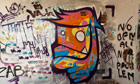
 Bringing peace through skateboarding and street art
-
-
Skating in the converted pool. Photograph: Nathan Gray
As the dust of Tunisia's jasmine revolution settled, some may have found it difficult to see the potential of bullet-riddled buildings and a swimming pool full of rubble. But not one troupe of skateboarders and street artists.
Known collectively as the Bedouins, the Middle East-based crew – consisting of between 10 and 20 members – aims to bring residents of conflict zones together through the medium of skateboarding and art. Their first jaunt was documented in a film called Sour, which saw Jordanians and Israelis jumping the cultural divide to ride with each other in the midst of the 2006 Lebanon war. Following suit, the wily skaters went in search of post-revolution skate spots in Tunisia and unearthed a goldmine – Imed Trabelsi's abandoned mansion.
Trabelsi, the former construction minister of toppled dictator Zine El Abidine Ben Ali and the nephew of his wife, was chased out of his mansion by protesters angry at his corrupt dealings within Tunisia's political ranks. After Trabelsi fled, the Bedouins took root in the once immaculate mansion and turned it into a makeshift skate park and street-art exhibition in a single day. The result was a den of graffiti and reinvented architecture, purpose-built with the aid of locals who emptied the pool and built up concrete cambers at the corners to make it skateable.
The founder of the Bedouins, Nathan Gray envisioned this elaborate, improvised renovation. "It was spontaneous," he says. "We never had a plan to do this project before we arrived in Tunisia. We just knew the big picture: we wanted to inspire the youth around the world, and support the Tunisian skate scene and the artists. When we got there, we were like: 'How can we do it? What resources do we have? What's here?'"
Gray first founded the non-profit organisation after taking skateboards to the slum districts of Bangalore on a student exchange trip. He taught the children how to ride before returning a year later to live with them for several months.
After arriving in Tunisia last summer, the skaters visited several crumbling sites before being taken to the ransacked Trabelsi mansion by some nearby residents who thought they might find it interesting. "The locals were like, 'Check out this mansion, the graffiti's all political!' It was already kind of a landmark to them." As the crew and street artists arrived at the Trabelsi house, they faced a scene of devastation. "When we got there and saw the pool, it was full of trash," he laughs. "But we were like: 'This could be a dream … let's make it happen.' We saw what was there and chose to transform it, that's what we do. We're skaters and artists – we transform things. But it was important to do it in a way that would honour what the Tunisians had been through."
The locals shared the Bedouins' vision and gathered a team of volunteers from the surrounding areas. Scores of people became involved in a matter of hours. "We connected with a few residents when we got there, we made some calls and they said: 'Yes! We'll be there in an hour and we'll bring some of our friends,'" recalls Gray, as if he were still there digging rubble from the dolphin tiled swimming pool and mixing Postcrete in a bucket. "And then their friends made some calls. Everyone showed up and liked the idea of converting the place into something anybody could skate and enjoy. The locals told us they'd help out however we needed them to. They didn't know how to build it, but they were down to make it happen".
The foundations for the concrete concaves were built up from destroyed pillars that protesters tore down while raiding the mansion and chasing the crooked politician out of his ill-gotten estate. "It was a cool thing that we used a lot of the stones that were broken up and shattered from the house for the foundations of the ramps," adds Gray.
As the ramps set in the midday sun the street artists moved in and began to redecorate the walls, adding political graffiti. One of the most symbolic is a colourful mural put up near the converted pool by Yehia Ossama, that reads "Al Arab" ("The Arabs"). Yehia is a street artist from Egypt who wanted to pay his respects to the Tunisians for triggering the wave of revolution that liberated his country. Gray explains: "Yehia experienced the Egyptian revolution, so he came to Tunisia and was honoured because those guys helped inspire his country's uprising. [In Egypt] he had to guard his house every night from looters – skating was just out of the question. So out of solidarity and the chance he had to skate again, he just wanted to write that piece on the wall. It was pretty powerful."
The Bedouins, with the help of pro skaters, NGOs, and even the US embassy in Tunisia, film and document all of their expeditions. From their first film, Smile, which followed Gray's time in India to Sour – "a film about doing the things you love with people you're not supposed to like" in the middle of the Lebanon war, and now Push Tunisia, which will premiere this year.
Later in their Tunisian excursion, the Bedouins met with El Général, the political Tunisian rapper who was imprisoned a week after the uprising because of an underground release of his song Rais Lebled, which is now referred to as the anthem of the jasmine revolution. Rais Lebled criticised Ben Ali's corruption and how the disadvantaged youth were being ignored. El Général spoke of the incident. "It's like any other song I've written, except it came out at a critical time – 7 November 2010 – when Ben Ali was celebrating 23 years of presidency, 23 years of 'owning' Tunisia. I released it that day as a gift to him".
Strict censorship laws at the time kept dissident music out of the mainstream, so El Général put the track out via the internet. "Al Jazeera made a report on the song and the buzz it created on Facebook. After that, there were clashes in the streets. On the 17 December in Sidi Bouzid, Mohammed Al Bouazizi burned himself. After that I released another song called Tunis Bladna (Tunisia is our country). Then the police came to my house at 5am and I was taken to the ministry of internal affairs for investigation. I stayed there for three days. They wanted to file a case against me for 'incitement of the people against the president'. The news got out, and the fans on my Facebook page and the Tunisian people started talking about it. Al-Jazeera and France 24 published news about how El Général had been arrested. Three days later I was released".
El Général has since been named as one of 2011's most influential people by Time magazine and now has the backing of the new Tunisian Ministry of Culture. The mansion-come-skatepark is still going strong and, although nowhere near as significant as Bouazizi's self-immolation and the uprising, its DIY energy stands as a testament to the Arab spring.


More on this story
- Bringing peace through skateboarding and street art


Why don't we show the price?
Sellers
have the right to set their own prices independently, but some
manufacturers place restrictions on how these prices will be displayed
or communicated to others.


No comments:
Post a Comment